
JLL - EXECUTIVE CONTENT FOR DAVOS 2026
Fortune 500 Executive Content Filmed in 1/3 the Time, Re-Hired for the Second Assignment.
CLIENT: JLL (Jones Lang LaSalle)
PROJECT: Executive Interview Production for World Economic Forum, Davos 2026
LOCATION: Chicago, Illinois + Detroit, Michigan
ROLE: Solo Producer/Director of Photography (3-camera operation)
DELIVERABLE: Multi-angle cinematic interview footage representing JLL's USA operations at the world's most influential economic summit
OUTCOME: Re-hired for second interview based on creative approach and professionalism from first shoot
the stakes
About JLL
Jones Lang LaSalle (JLL) is a Fortune 200 professional services firm specializing in real estate and investment management. With operations in 80+ countries and annual revenue exceeding $20 billion, JLL advises the world's largest corporations, institutions, and investors on property strategy and asset management.
About Davos
The World Economic Forum's Annual Meeting in Davos, Switzerland convenes 3,000+ global leaders from heads of state, Fortune 500 CEOs, central bank governors, to international organization directors. Davos 2026 will bring together decision-makers representing over 60% of global GDP to shape economic policy, international business strategy, and market direction.
What this means:
When your footage appears at Davos, you're not making a corporate video, you're crafting how American business leadership presents itself to the people who move markets and shape policy. There are no reshoots. There is no margin for error.
THE BRIEF
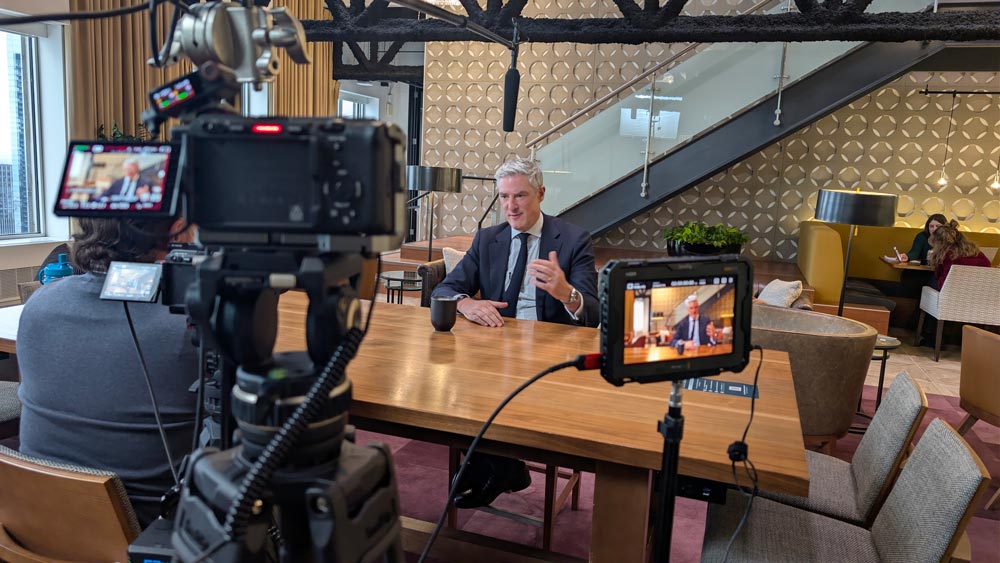
Shoot a two-camera executive interview for JLL's Davos presentation. Standard corporate coverage: locked cameras, controlled environment, adequate time for setup and b-roll.
Simple. Professional. Low-risk.
THE REALITY
An hour before the scheduled interview, the plan changed:
Time available: 20 minutes with the executive (not the planned 60)
B-roll time: None
Location flexibility: Limited
Stakes: Unchanged - this footage still needs to represent JLL at the World Economic Forum
The problem: Standard two-camera interview coverage with no b-roll would deliver technically competent but visually flat footage. Less visually interesting for the stage it would appear on.
the decision
When I learned about the constraints, I didn't panic. I assessed what we had:
The space: A live office environment with people, ambient sound, natural energy
The cameras: Two locked cameras on the hero, plus two backup cameras I carry to every shoot
The opportunity: 20 minutes means we can't waste a second and it also means the executive's energy stays high. No fatigue.
The solution came almost immediately:
Pull the third camera. Go handheld. Break the fourth wall.
Why this works:
Two locked cameras give us the safety, standard coverage if we need it
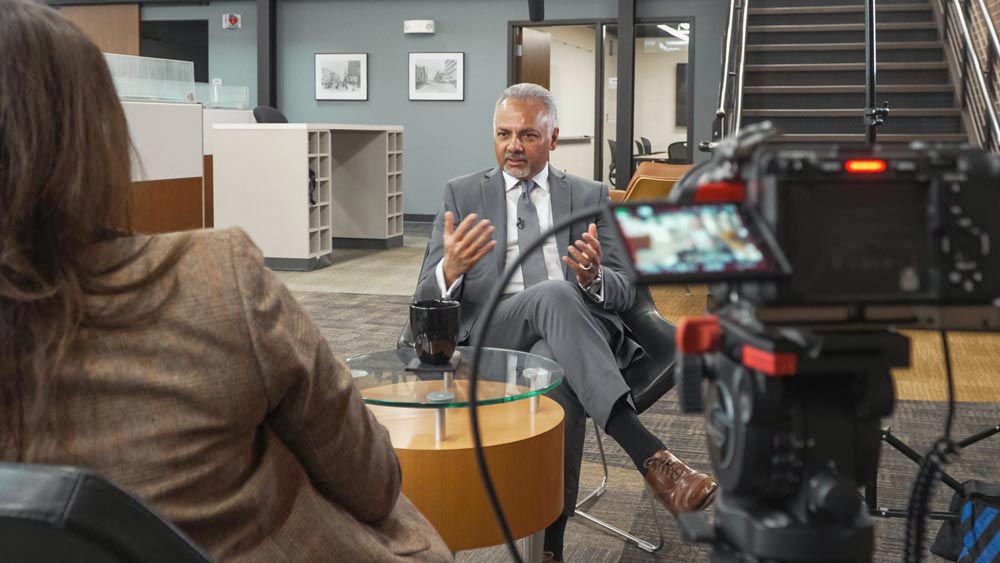
Third handheld camera creates the visual variety that b-roll would have provided
"Breaking the fourth wall" aesthetic = voyeuristic, fly-on-the-wall feeling.
People don't normally see the behind-the-scenes of high-stakes interviews. That became the creative angle.
I communicated the plan change the way I always do when I'm confident in the outcome: I saw it in my head and delivered it with visual clarity. It helped that the client didn't incur additional cost or time. The third camera was already in my kit. The setup time stayed the same.
THE EXECUTION
Camera Strategy
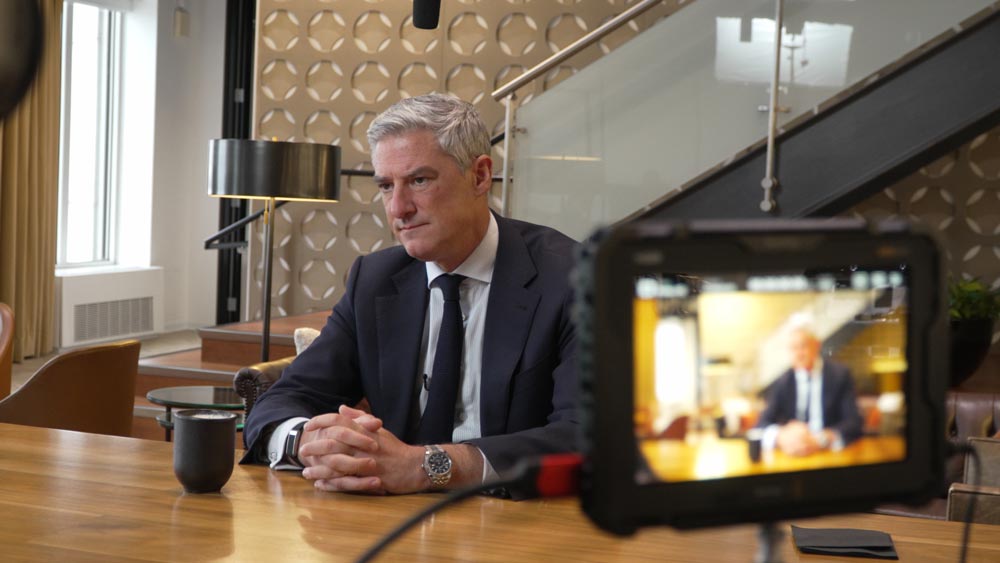
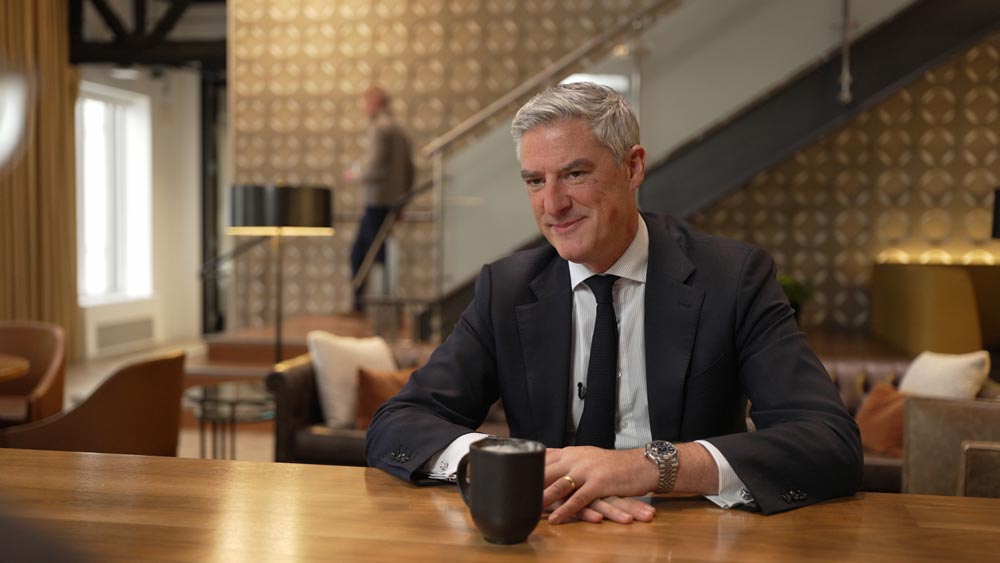
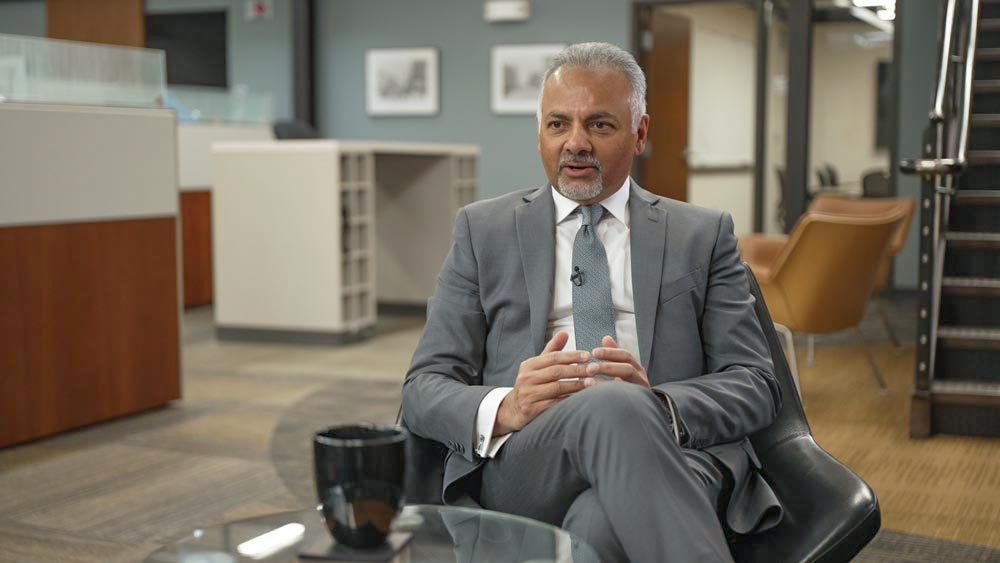
Camera A (Locked): Wide establishing shot, editorial framing
Camera B (Locked): Medium close-up, primary interview angle
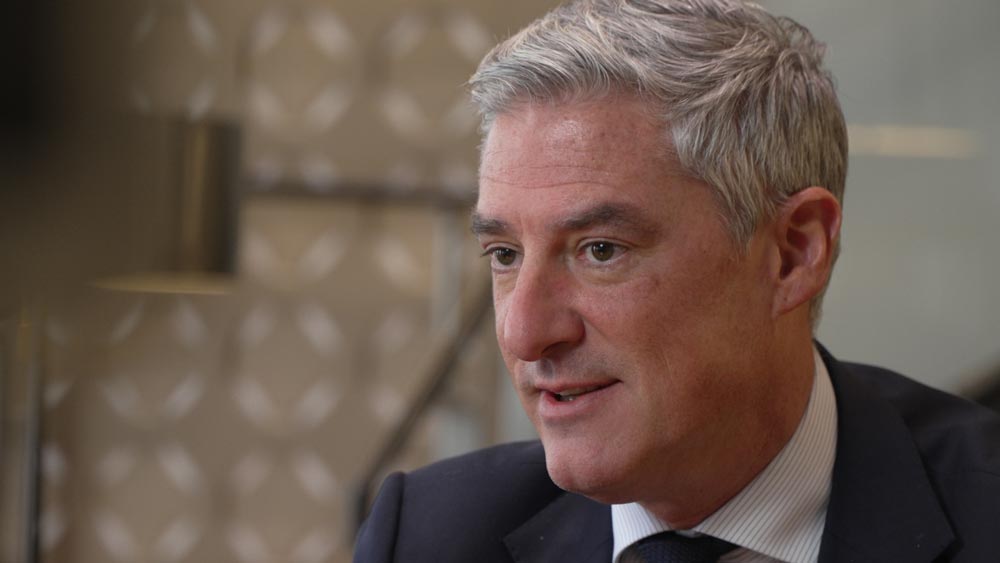
Camera C (Handheld): Extreme close-ups, high/medium/low angles, shooting through set elements, behind the other cameras, over-the-shoulder shots
The 3rd camera angles became the b-roll:
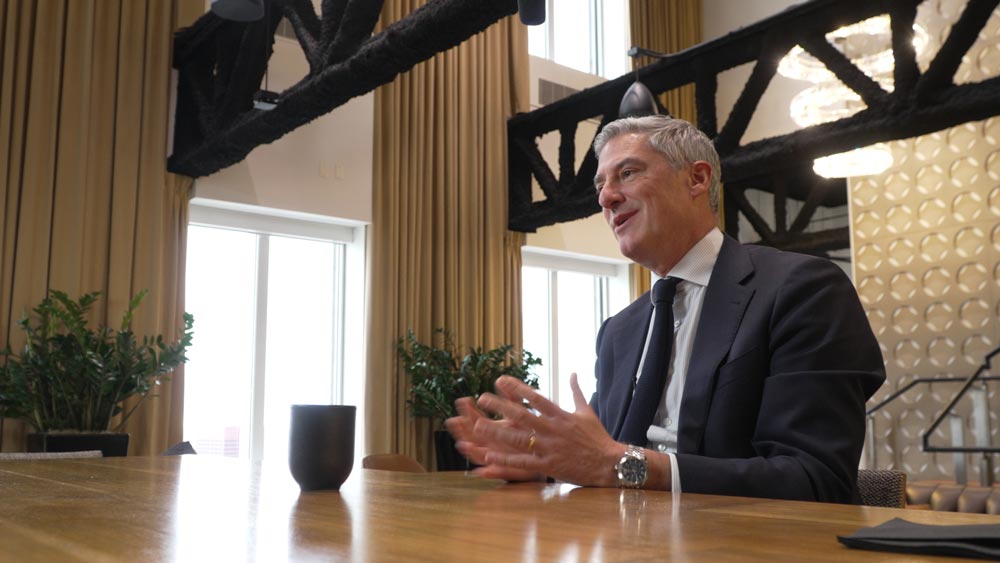
- Close-up hand gestures during key points
- OTS (over-the-shoulder) shots showing the interview environment
- Shooting the monitor displaying another camera angle
- Movement between wide and tight framing
- Capturing moments where the executive glanced off-camera or interacted with the space
What Made It Cinematic
Lenses: High aperture glass, creamy bokeh in the background
Lighting: Warm color temperature, practical lights in frame, dimensional depth
Location selection: Live office space with ambient activity vs. sterile white wall
Angle choices: Dynamic framing that honored the executive's authority while showing human presence
Sound design: Room tone, environmental presence—the feeling of being there
This wasn't a corporate talking head. This was editorial documentary style applied to business leadership.
WHAT I LEARNED (And How It Helps Future Clients)
For Corporate Teams and Associations
Lesson 1:
Be prepared for anything.
Executives are busy. Locations change. Time windows shrink. Master your core coverage (two locked cameras, reliable angles), then have the experience and tools to improvise when the plan changes. That's what 20 years gives you: the ability to adapt without losing quality.
Lesson 2:
Intentional creative choices pay off with visionary clients.
JLL didn't want generic corporate coverage. They wanted something that matched the stage it would appear on. When you make creative decisions with intention, not just following a template, you create work clients want to repeat.
Lesson 3:
Confidence comes from facts, not ego.
I offered the third-camera approach because I knew I could deliver it without additional cost or time. That confidence came from having backup camera and knowing I could operate three cameras solo if needed. Experience allowed me to speak with certainty.
Lesson 4:
Make your executives feel seen.
High-stakes interviews land best when the person on camera feels safe, heard, and in good hands, through clear communication, steady encouragement, genuine human treatment (not “talent”), and a sense of control even under tight timelines.
Time constraints are normal. Plan for them.
If you're trying to capture a physician with 700 patients, a CMO managing 15 departments, or a surgeon between procedures, assume you'll have 15-20 minutes maximum. That doesn't mean settling for poor content. It means having a producer who can create visual variety without needing hours of b-roll.
The same three-camera approach I used for JLL works for healthcare: lock your safety coverage, use the third camera for dynamic angles, and create the editorial options in-camera.
WHEN TO ADD VALUE BEYOND THE BRIEF
I add creative value beyond the original scope when:
✓ A relationship has been formed (the agency trusted me, I trusted my instincts)
✓ Experience speaks for itself (20 years means I know what works)
✓ It doesn't exceed budget or time (client incurs no additional cost)
✓ I want to build a long-term relationship, not just make a quick buck
✓ I want to be genuinely proud of the work
For me, relationship is #1. JLL asked the Agency to re-hire me for filming another Executive in Detroit.
This proved that my approach and expertise is working.

What Engine can I build for you?
You just read how I turned 20 minutes into platform-ready assets and a second assignment. If you need executive interview content, conference coverage, or production that adapts when reality hits the schedule, let's talk.
I work through three models: an Expert Content Engine for solo practitioners and founders, a Care Content Engine for healthcare organizations, or standalone projects for one-time needs.
No pitch. No pressure.
Just a conversation to see if this fits your goals and your workflow.
Start a Project